Why Baggage Tracking Is Becoming a Major Customer Experience Differentiator
July 28, 2026
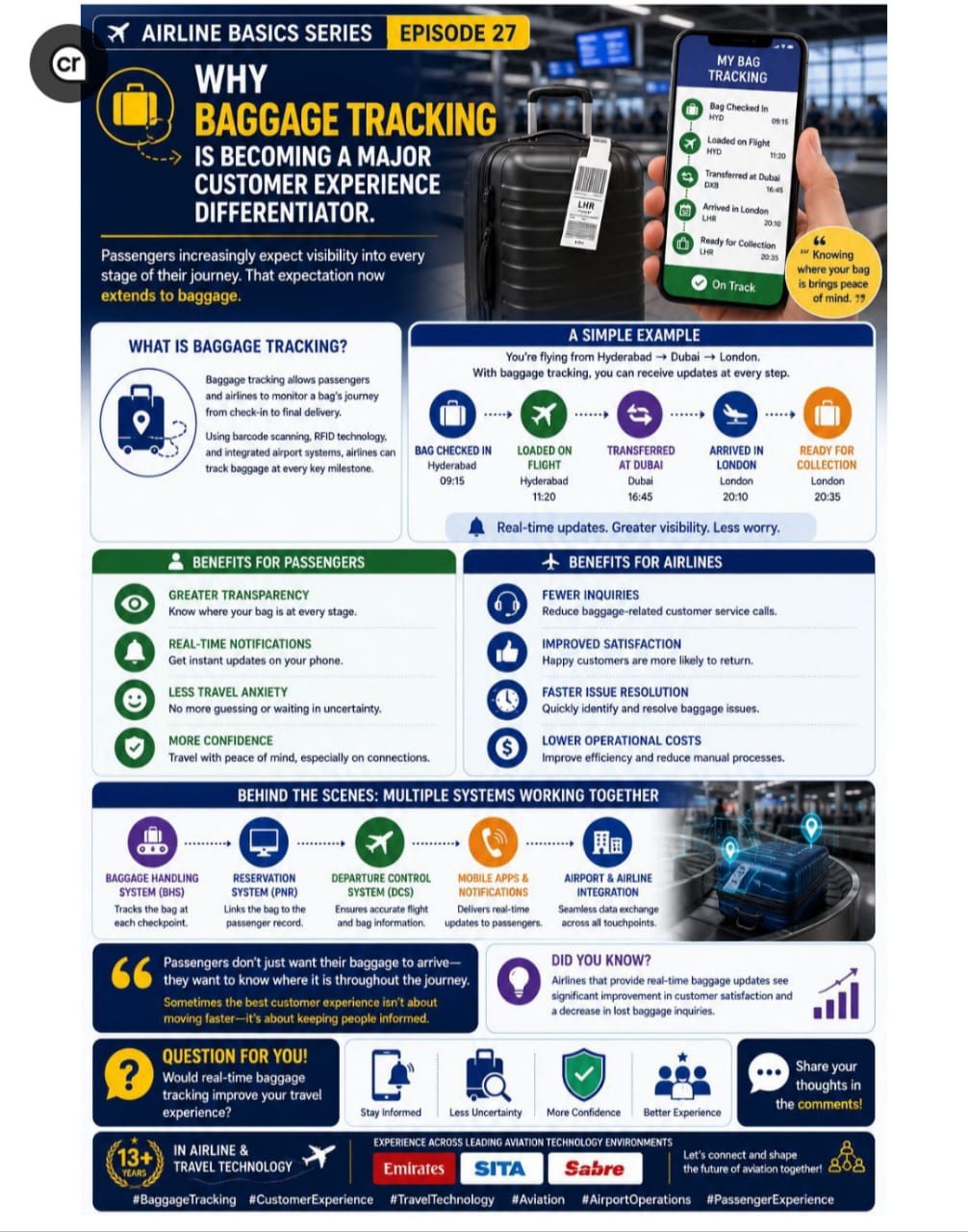
Baggage tracking is no longer just an operational feature; it is now a visible part of the passenger experience. As travelers expect more transparency at every step, real-time bag updates have become a strong service advantage.
What baggage tracking means
Baggage tracking allows passengers and airlines to monitor a bag’s journey from check-in to final delivery. Using barcode scanning, RFID technology, and integrated airport systems, airlines can record each milestone in the baggage flow.
This gives both passengers and staff better visibility into where the bag is, which makes the process feel more reliable and controlled.
Why passengers value it
Passengers want reassurance that their bags are moving with them. When they can see updates such as “checked in,” “loaded on flight,” “transferred,” or “ready for collection,” travel feels less uncertain.
The biggest passenger benefits include:
 Greater transparency.
- Real-time notifications.
- Less travel anxiety.
- More confidence during connections.
- Better overall trust in the airline.
For many travelers, simply knowing where the bag is reduces stress significantly.
How it works
A typical baggage tracking journey starts at the check-in desk. The bag is tagged, scanned, and linked to the passenger record so the system can follow it through each stage.
A simple example would be a bag checked in at Hyderabad, loaded onto the flight, transferred at Dubai, and then arriving in London for collection. Each scan creates an update, and that update can be shared through a mobile app or airline notification system.
Benefits for airlines
Baggage tracking is also valuable for airlines, not just passengers. It reduces customer service queries because travelers can check the status themselves instead of calling support.
The main airline benefits are:
• Fewer baggage-related inquiries.
• Improved customer satisfaction.
• Faster issue resolution.
• Lower operational costs.
• Better service reputation.
In a competitive market, better baggage visibility can directly improve loyalty and repeat business.
Behind the scenes
A baggage tracking system works only when several departments are connected. Baggage handling systems, reservation systems, departure control, mobile apps, and airport-airline integration all need to exchange data smoothly.
That coordination is what makes the passenger-facing update possible. Without it, the tracking message would not be accurate or timely.
Why this matters now
Today’s passengers expect the same kind of visibility for baggage that they already get for food delivery, ride-hailing, and parcel services. Airlines that provide this level of tracking are often seen as more modern and more customer-focused.
The future of baggage handling is not only about moving bags efficiently. It is also about keeping passengers informed at every step.
Closing thought
Baggage tracking has become a clear customer experience differentiator because it turns a hidden process into a visible service. When passengers can trust where their bag is, they also trust the airline more.