Passenger Touchpoints That Shape NPS in Aviation
July 01, 2026
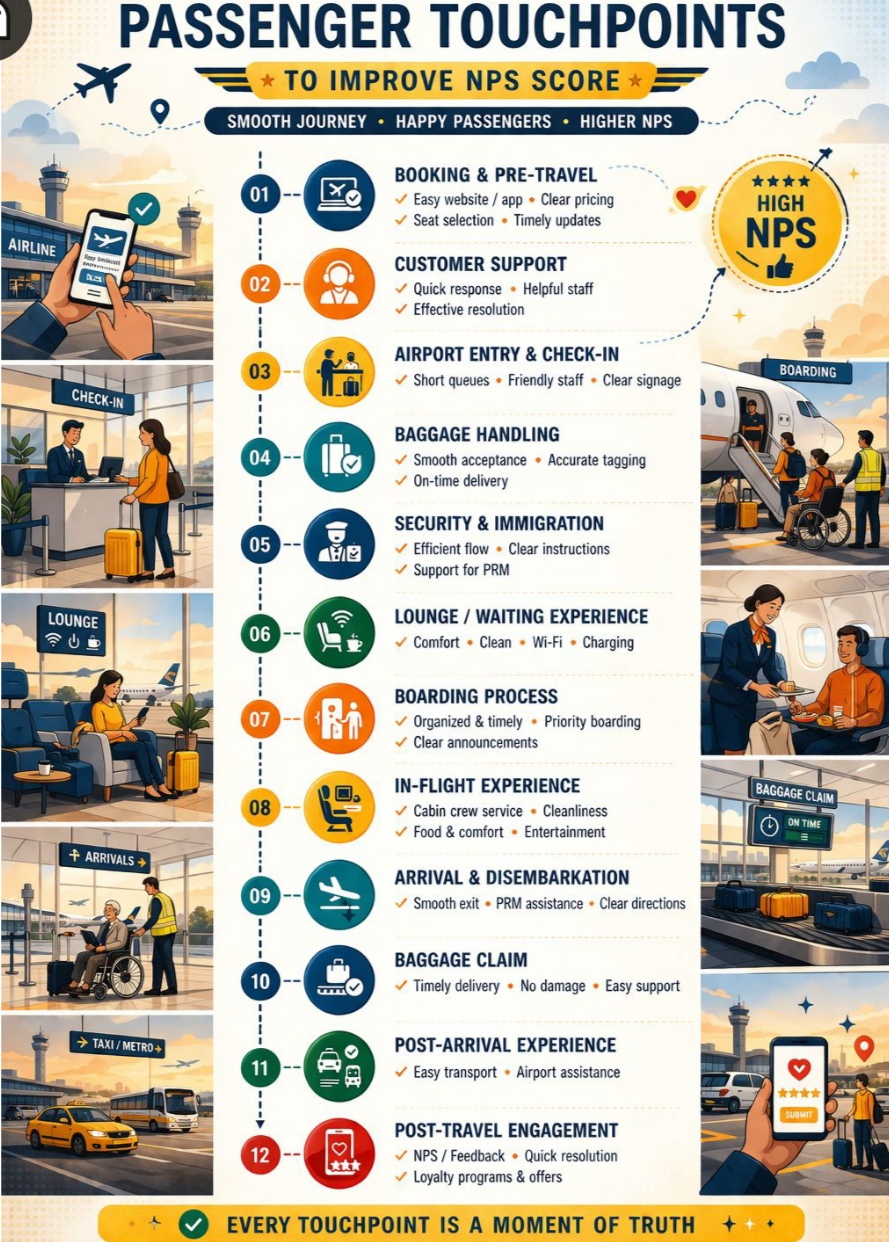
In aviation, every passenger interaction influences satisfaction, loyalty, and the final Net Promoter Score (NPS). From booking to post-travel feedback, each touchpoint is a moment of truth that can either build trust or create frustration.
Why Touchpoints Matter
Passenger experience is no longer judged only by the flight itself. Travelers form opinions from the first app visit to the final baggage claim and post-trip support. A smooth journey across these touchpoints improves confidence, repeat travel, and brand loyalty.
1. Booking and Pre-Travel
The journey begins long before departure. A clear website or app, transparent pricing, easy seat selection, and timely updates reduce uncertainty and build trust.
Airlines that make booking simple create a strong first impression. Proactive notifications about schedule changes, baggage rules, and travel requirements also prevent complaints later.
2. Customer Support
Responsive customer support is one of the strongest drivers of satisfaction. Passengers value quick replies, helpful staff, and effective issue resolution when problems arise.
Whether the query is about booking, refunds, special assistance, or disruptions, consistency matters. Poor support often damages the passenger’s entire perception of the airline.
3. Airport Entry and Check-In
The airport experience sets the tone for the rest of the journey. Short queues, clear signage, and polite staff help passengers move through check-in with less stress.
Efficient counters, self-service options, and support for elderly travelers or first-time flyers can significantly improve NPS. Even small delays at this stage can create a negative start.
4. Baggage Handling
Baggage is one of the most visible operational touchpoints. Smooth acceptance, accurate tagging, and on-time delivery all contribute directly to passenger confidence.
Lost, delayed, or damaged baggage creates immediate dissatisfaction. Good baggage handling is not just a ground operations issue; it is a key part of customer experience.
5. Security and Immigration
Passengers expect security and immigration processes to be efficient and well-organized. Clear instructions, proper queue management, and support for passengers with reduced mobility improve flow and reduce anxiety.
When these processes are confusing or slow, the overall airport experience suffers. Well-trained staff can make a major difference in how passengers remember the journey.
6. Lounge and Waiting Experience
For many travelers, waiting time is unavoidable, so comfort matters. Clean seating, Wi‑Fi, charging points, refreshments, and a calm environment improve the pre-boarding experience.
A good lounge or waiting area can turn idle time into a positive part of the trip. This is especially important for frequent flyers and premium customers.
7. Boarding Process
Boarding should feel organized, calm, and timely. Clear announcements, priority handling, and efficient passenger flow reduce congestion at the gate.
Poor boarding management often leads to confusion, crowding, and dissatisfaction. A disciplined boarding process supports both punctuality and customer comfort.
8. In-Flight Experience
Once airborne, cabin crew service, cleanliness, food, comfort, and entertainment shape the passenger’s memory of the airline. Courtesy and attentiveness from crew members can quickly improve satisfaction even if earlier stages were difficult.
Seat comfort, cabin ambience, and service quality are especially important on longer sectors. A well-managed cabin experience often becomes the most talked-about part of the journey.
9. Arrival and Disembarkation
The passenger experience does not end at landing. Smooth disembarkation, clear directions, and assistance for passengers who need help create a positive final impression.
Delays on the ramp or poor coordination at arrival can undo earlier good service. A well-handled arrival process helps maintain goodwill right until the traveler exits the airport.
10. Baggage Claim
Baggage claim is one of the last major touchpoints, and passengers judge airlines heavily here. Timely delivery, no damage, and easy support are essential to ending the journey well.
When bags arrive quickly and intact, passengers leave with confidence. When baggage is delayed, the airline’s service recovery response becomes critical.
11. Post-Arrival Experience
Passengers continue evaluating the journey after leaving the terminal. Easy access to transport, airport assistance, and guidance for connecting travel help complete the experience smoothly.
This stage is especially important for tourists, elderly travelers, and business passengers on tight schedules. A well-managed exit improves the overall impression of the airport and airline.
12. Post-Travel Engagement
The relationship should not end after arrival. Feedback requests, fast complaint resolution, loyalty rewards, and relevant offers keep passengers connected to the airline.
This stage is also where airlines can learn what worked and what failed. Good post-travel engagement supports continuous improvement and stronger NPS over time.
Conclusion
Passenger experience is built across the full journey, not at a single point. Airlines and airports that manage each touchpoint well create smoother journeys, happier passengers, and stronger loyalty.