India’s Latest Airline FLY91 Orders 40 ATR 72-600 Aircraft: Major Boost for India’s Regional Aviation
September 25, 2026
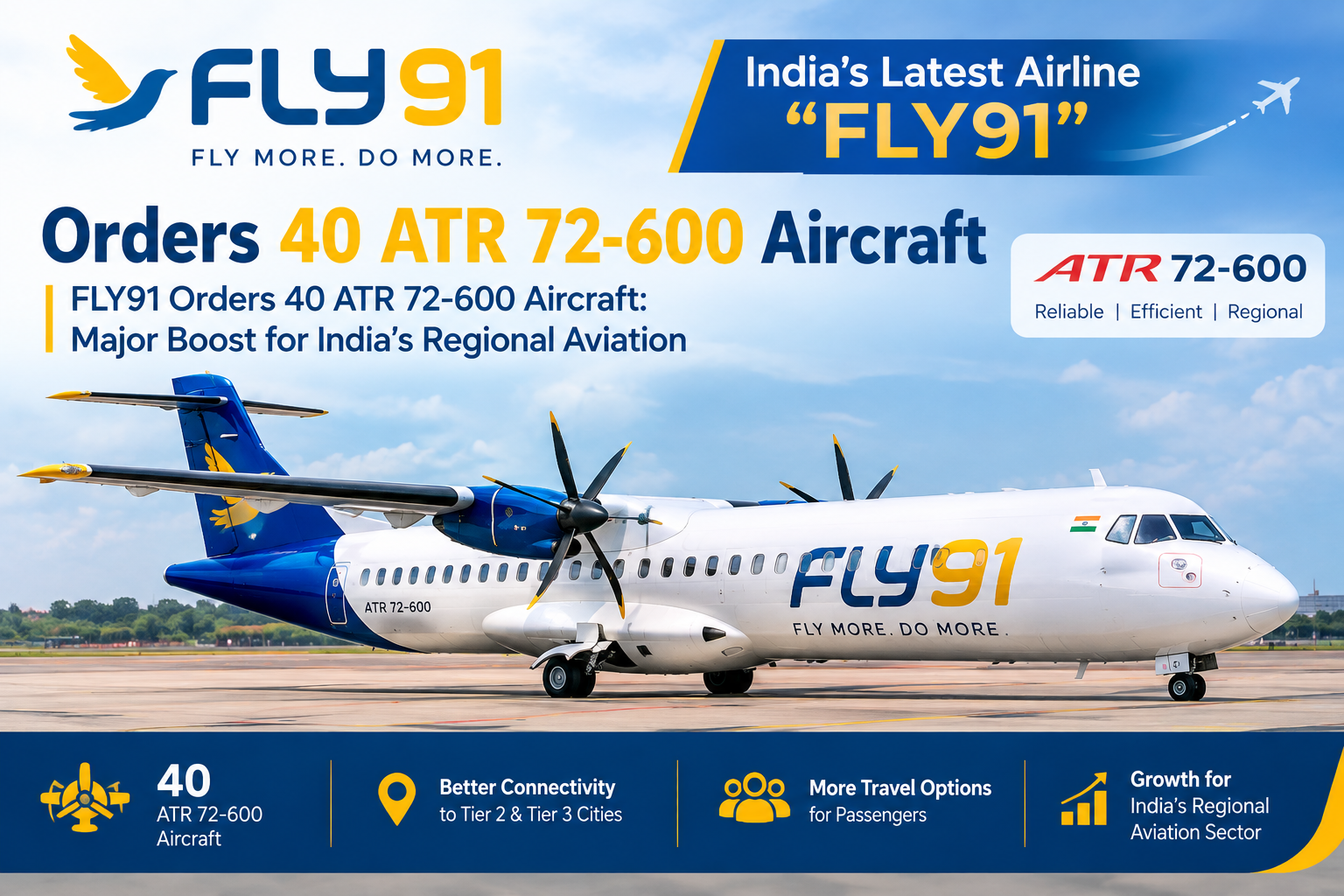
India’s regional aviation sector is entering an important new phase as Goa-based airline FLY91 places a firm order for 40 ATR 72-600 aircraft worth approximately US$1 billion.
The landmark order, announced by FLY91 and ATR on 3rd September 2026, is described by ATR as its largest firm order in almost a decade and the largest-ever ATR order by a regional airline. Deliveries are scheduled to take place between 2027 and 2032.
For aviation students and aspiring aviation professionals, the announcement is significant because it highlights the growing importance of regional connectivity, smaller-city airports and aviation employment opportunities in India.
✈️ *FLY91’s Fleet Could Grow From 6 to 60 Aircraft*
FLY91 currently operates a fleet of six ATR 72-600 aircraft. With the new order, the airline plans to expand its fleet substantially over the coming years, with the order forming the foundation for a fleet of around 60 aircraft within five years.
🛩️ Why the ATR 72-600 Is Important for Regional Aviation
The ATR 72-600 is a turboprop aircraft designed for regional and short-haul operations.
Its operating characteristics make it particularly suitable for routes where passenger demand may not justify the use of larger narrow-body aircraft.
ATR says its aircraft family is designed for regional aviation, with aircraft offering 44–78 seats, depending on configuration.
For airlines such as FLY91, regional aircraft can support the development of routes between smaller cities and larger economic centres.
This is particularly relevant to India, where a significant proportion of intercity travel still takes place by road and rail.
In India’s Regional Aviation Opportunity
India has a large and growing domestic aviation market, but air connectivity is still uneven across the country.
ATR says India sees approximately 4.6 billion intercity journeys every year, while only around 3% are currently made by air. The manufacturer believes regional aviation could help bring air travel to many more communities.
This creates an opportunity for regional airlines to develop networks connecting:
→ Tier 2 cities
→ Tier 3 cities
→ Regional airports
→ Emerging business centres
→ Tourism destinations
→ Underserved communities
Government initiatives supporting regional connectivity, including the UDAN programme, are also aimed at improving access to air travel in underserved regions.
🛫 FLY91’s Regional Aviation Strategy
FLY91 has built its business around the idea of creating a dedicated regional network connecting emerging Indian cities.
The airline’s founder and CEO, Manoj Chacko, has described the 40-aircraft order as a major catalyst for the company’s next stage of development. ATR says FLY91 sees the ATR 72-600 as well suited to its regional network because of its operating economics.
The planned deliveries from 2027 through 2032 also indicate that this is a long-term fleet and network expansion programme rather than a short-term capacity increase.
👩✈️ What Does FLY91’s Expansion Mean for Aviation Careers?
One of the most interesting aspects of airline expansion is its potential impact on the wider aviation employment ecosystem.
When an airline expands its fleet and network, additional manpower may be required across multiple functions.
Potential areas include:
✈️ Flight Operations
✈️ Pilots
✈️ Flight operations support
✈️ Dispatch and operational functions
✈️ Cabin crew
✈️ Passenger service
✈️ Customer experience
🛫 Airport & Ground Operations
✈️ Passenger service executives
✈️ Check-in and boarding staff
✈️ Ground handling
✈️ Ramp operations
✈️ Baggage services
🎫 Commercial & Customer Service
✈️ Ticketing
✈️ Reservations
✈️ Customer support
✈️ Airport service functions
📦 Other Aviation Functions
✈️ Cargo and logistics
✈️ Administration
✈️ Safety and compliance
✈️ Maintenance and engineering support
Important: Airline fleet expansion does not automatically mean that every role will be available immediately. Recruitment depends on the airline’s operational plans, vacancies, regulatory requirements and candidate eligibility.
🎓 Why This News Matters to Aviation Students
The FLY91 order is another example of how India’s aviation industry is evolving beyond major metro airports.
For students considering an aviation career, the growth of regional aviation can create opportunities to work not only with large national airlines but also across:
Airlines | Regional Airlines | Airports | Ground Handling | Passenger Services | Cargo | Aviation Operations
Students interested in aviation should therefore develop skills that are useful across multiple areas of the industry.
These include:
✈️ Communication skills
✈️ Customer service
✈️ Aviation knowledge
✈️ Professional grooming
✈️ Teamwork
✈️ Problem-solving
✈️ Safety awareness
✈️ Interview skills
✈️ Computer and operational skills
🚀 India’s Regional Aviation Sector: What Comes Next?
The FLY91 order comes at a time when India’s aviation industry is continuing to expand.
A fleet increase from six aircraft toward approximately 60 represents a significant growth ambition for a relatively young regional airline. The order also demonstrates the continuing relevance of turboprop aircraft for short-haul regional networks.
If regional connectivity continues to expand, more Indian cities could become connected through direct or improved air services.
That could benefit not only passengers and businesses but also the broader aviation ecosystem—including airport operations, ground handling, hospitality, logistics and aviation training.
✈️ Build Your Aviation Career With the Right Skills
The growth of Indian aviation is creating interest among students looking for careers in the airline and airport industry.
At PTC Aviation Academy, students can explore aviation-focused training pathways including:
👨✈️ Pilot / CPL Training
For students interested in pursuing a professional pilot pathway.
👩✈️ Cabin Crew / Air Hostess Training
Focused on communication, grooming, customer service and airline interview preparation.
🛫 Airport Ground Staff Training
Focused on passenger services, airport operations, check-in, boarding, customer service and ground operations.
PTC also offers training related to other areas of aviation and airport operations.
🎯 Not sure which aviation career is right for you?
Book a FREE Aviation Career Counselling session with PTC Aviation Academy.
Frequently Asked Questions
What aircraft has FLY91 ordered?
FLY91 has placed a firm order for 40 ATR 72-600 aircraft.
How much is the FLY91 aircraft order worth?
The order is valued at approximately US$1 billion at announced/list-price value.
When will FLY91 receive the new aircraft?
Deliveries are scheduled between 2027 and 2032.
How many aircraft does FLY91 currently operate?
FLY91 currently operates six aircraft, according to ATR’s announcement.
How many aircraft could FLY91 have in the future?
The new order is intended to support growth from the current six-aircraft fleet toward approximately 60 aircraft within five years.
Why is the ATR 72-600 suitable for regional aviation?
The ATR 72-600 is designed for regional operations and is well suited to short-haul networks where airlines need efficient aircraft for connecting smaller and emerging markets.
Can FLY91’s expansion create aviation job opportunities?
Airline expansion can increase manpower requirements across areas such as flight operations, cabin services, airport operations, customer service and ground handling. However, actual recruitment depends on vacancies, eligibility and the airline’s hiring plans.
Conclusion
For aspiring aviation professionals, developments such as these demonstrate why it is important to build industry knowledge, communication skills, customer-service abilities and professional confidence.
The future of Indian aviation is not only about bigger airports and larger aircrafts—it is also about connecting more cities and creating more opportunities across the aviation ecosystem.
✈️ Thinking About an Aviation Career?
Explore Pilot, Cabin Crew and Airport Ground Staff training at PTC Aviation Academy.