Base Maintenance vs Line Maintenance: Understanding the Two Pillars of Aircraft Safety
August 11, 2026
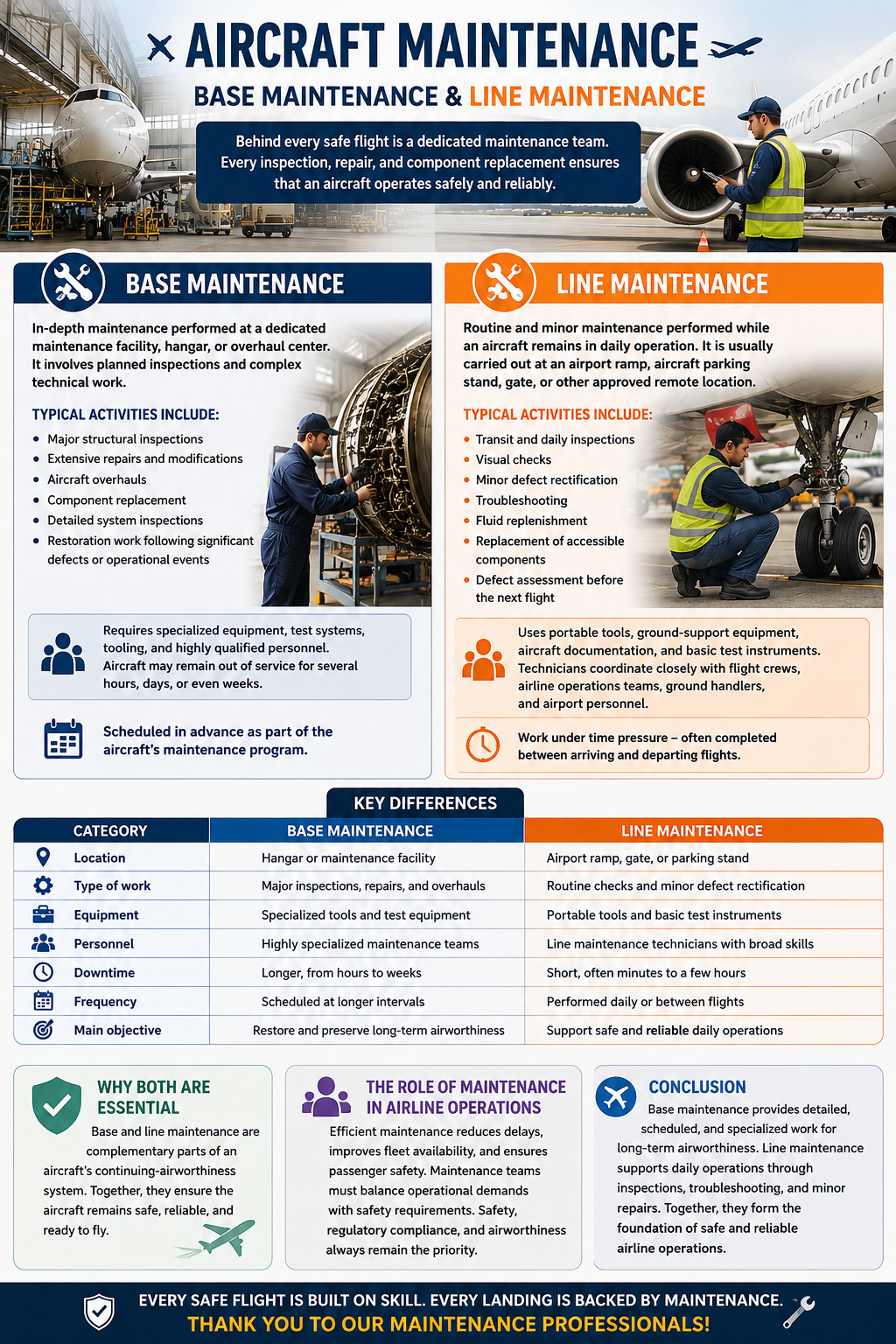
Aircraft maintenance is one of the most important parts of aviation safety. Although passengers may not see the work carried out by maintenance teams, every inspection, repair, and component replacement helps ensure that an aircraft operates safely and reliably. Aircraft maintenance is generally divided into two major categories: base maintenance and line maintenance.
What Is Base Maintenance?
Base maintenance refers to in-depth aircraft maintenance performed at a dedicated maintenance facility, hangar, or overhaul center. It involves planned inspections and complex technical work that cannot normally be completed during a short aircraft turnaround.
Typical base-maintenance activities include:
 Major structural inspections.
- Extensive repairs and modifications.
- Aircraft overhauls.
- Component replacement.
- Detailed system inspections.
Restoration work following significant defects or operational events. Base maintenance usually requires specialized equipment, test systems, tooling, and highly qualified personnel. Engineers, licensed aircraft maintenance technicians, inspectors, and other specialists may work together on different aircraft systems.
Because the work is extensive, the aircraft may remain out of service for several hours, days, or even weeks. These maintenance events are scheduled in advance as part of the aircraft’s maintenance program.
What Is Line Maintenance?
Line maintenance is the routine and minor maintenance performed while an aircraft remains in daily operation. It is usually carried out at an airport ramp, aircraft parking stand, gate, or other approved remote location.
Line-maintenance activities may include:
- Transit and daily inspections.
- Visual checks.
- Minor defect rectification.
- Troubleshooting.
- Fluid replenishment.
- Replacement of accessible components.
- Defect assessment before the next flight.
Line maintenance technicians work under significant time pressure because their tasks are often completed between arriving and departing flights. Their work helps ensure that the aircraft is safe, serviceable, and ready for its next sector.
Line maintenance requires portable tools, ground-support equipment, aircraft documentation, and basic test instruments. Technicians must also coordinate closely with flight crews, airline operations teams, ground handlers, and airport personnel.
Key Differences
✈️ Category Base maintenance Line maintenance
✈️ Location Hangar or maintenance facility Airport ramp, gate, or parking stand
✈️ Type of work Major inspections, repairs, and overhauls Routine checks and minor defect rectification
✈️ Equipment Specialized tools and test equipment Portable tools and basic test instruments
✈️Personnel Highly specialized maintenance teams Line maintenance technicians with broad skills
✈️ Downtime Longer, from hours to weeks Short, often minutes to a few hours
✈️Frequency Scheduled at longer intervals Performed daily or between flights
✈️Main objective Restore and preserve long-term airworthiness Support safe and reliable daily operations
✈️This comparison is illustrated in the accompanying maintenance infographic.
Why Both Are Essential
Base and line maintenance are not competing functions; they are complementary parts of an aircraft’s continuing-airworthiness system. Line maintenance keeps aircraft operating safely during their normal schedule, while base maintenance provides the detailed inspections and corrective work required over the aircraft’s service life.
A line technician may identify a recurring or complex defect that requires further investigation. If the issue cannot be resolved within the permitted line-maintenance scope, the aircraft may be transferred to a base-maintenance facility for more comprehensive work.
This cooperation ensures that maintenance decisions are made according to approved procedures, aircraft manuals, regulatory requirements, and safety standards.
The Role of Maintenance in Airline Operations
Efficient aircraft maintenance directly affects airline punctuality, fleet availability, and passenger safety. A well-organized line-maintenance operation can reduce delays and aircraft-on-ground events, while effective base maintenance helps prevent recurring defects and supports long-term fleet reliability.
Maintenance teams must balance operational demands with safety requirements. An aircraft should never be dispatched simply to protect the schedule if a defect requires further inspection or rectification. Safety, regulatory compliance, and airworthiness always remain the priority.
Conclusion
Base maintenance provides the detailed, scheduled, and specialized work required to preserve an aircraft’s long-term airworthiness. Line maintenance supports the aircraft’s daily operation through inspections, troubleshooting, and minor repairs.
Together, these two maintenance functions form the foundation of safe and reliable airline operations. Every successful flight depends not only on the pilots and cabin crew but also on the skilled maintenance professionals working behind the scenes.