AIRPORT HAZARDS
March 06, 2026
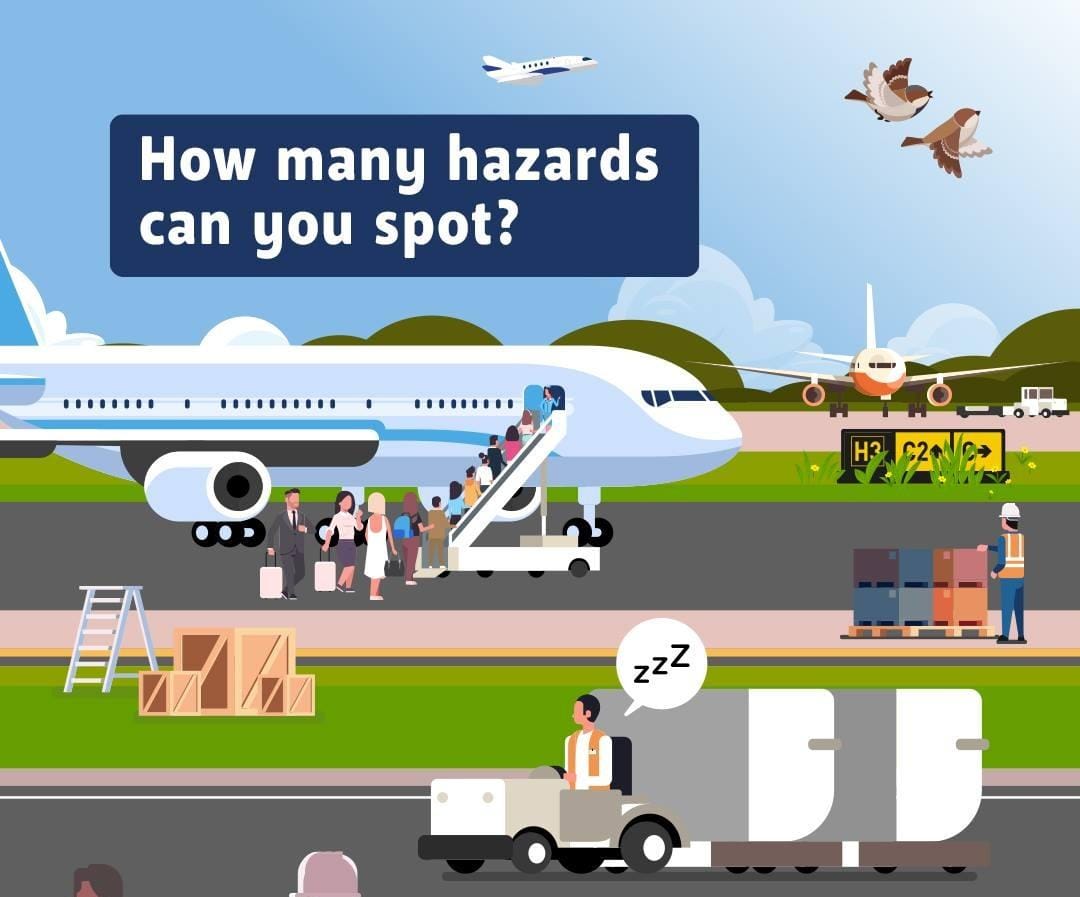
Airports face numerous hazards that impact workers, passengers, and operations, particularly on the apron and runway areas. These risks require strict safety protocols to mitigate.
Key Airside Hazards
 Working at height during cargo loading, fueling, or maintenance, where falls cause significant fatalities, use barriers and fall-arrest gear.
- Moving vehicles like baggage trucks and fuel tankers crossing paths with pedestrians, maintain hazard awareness on airside roads.
- Moving aircraft with restricted pilot visibility, jet blast, or engine ingestion risks; stay out of danger zones and follow apron signals.
Environmental Risks
- Fire from fuel, electrical faults, or smoking; enforce housekeeping and fire protocols.
- Weather issues like low visibility, wind shear, thunderstorms, or crosswinds affect takeoffs and landings.
- Wildlife strikes or incursions drawing birds to runways; conduct patrols and dispersal.
Ground and Ramp Issues
- Slips, trips on wet or cluttered surfaces, plus baggage handling strains, causing musculoskeletal injuries; apply manual handling training.
- Foreign Object Debris (FOD) damaging engines; perform regular sweeps with specialized tools.
- Ramp-specific threats like poor lighting, faded markings, fatigue, or short-circuiting equipment; train on identification and precautions. Preventions Airports prevent hazards through proactive risk assessments, training, and technology. These measures target airside operations, environmental threats, and ground activities.
Risk Assessment Strategies
Conduct detailed airside risk assessments to identify hazards like vehicle paths and clutter. Use data from NOTAMs, SMS reporting, and historical incidents to prioritize threats. Regularly audit and update plans to minimize incidents.
Training and Protocols
Train staff on hazard recognition, manual handling, and visibility gear like high-vis vests. Implement apron discipline, communication protocols, and fatigue management for ground crews. Continuous education covers roles from ATC to ramp workers.
Technological Mitigations
Deploy radar, Runway Status Lights (RWSL), signage, and lighting to curb incursions. Use weather tools like ATIS, ILS, and de-icing for visibility issues; wildlife patrols and FOD sweeps prevent strikes. Fire stations and emergency systems ensure rapid response.
Operational Controls
Enhance ATC-pilot communication and ground infrastructure. Monitor via sensors for crowds or anomalies; enforce housekeeping to avoid fires or slips. Safety Management Systems (SMS) track and correct risks systematically.